


Why High-Performing Teams Prioritize Recovery, Not Just Productivity

Today's highest-performing teams aren't working longer—they're recovering better.
For years, workplace success was measured by hours logged, inboxes cleared and calendars packed with meetings. While hard work will always matter, organizations are beginning to recognize that constant output without intentional recovery eventually leads to diminishing returns.
The science is becoming increasingly clear: employees who have opportunities to reset throughout the workday often report better focus, stronger collaboration and lower levels of chronic stress than those who are expected to stay "on" from morning until evening. Mindfulness, movement and structured recovery aren't distractions from productivity—they're essential ingredients for sustaining it over time. Recent systematic reviews have found mindfulness-based workplace programs can improve adaptive performance, contextual performance and aspects of task performance, though outcomes depend on how programs are implemented. PubMed
That's why workplace wellness Austin has evolved from an employee perk into a business strategy.
Organizations investing in recovery aren't asking employees to do less.
They're helping them perform better for longer.
Productivity Without Recovery Has Limits
Most professionals know what burnout feels like before they know its name.
It starts subtly.
Concentration becomes harder.
Small tasks require more effort.
Creative thinking slows.
Patience wears thin during meetings.
Eventually, performance begins to decline despite putting in more hours.
This isn't a failure of motivation.
It's often a lack of recovery.
Human attention naturally fluctuates throughout the day. Expecting someone to operate at peak performance for eight consecutive hours ignores how the brain actually functions.
Short moments of intentional recovery help restore mental resources before fatigue becomes overwhelming.
These resets don't require an entire afternoon away from work.
Sometimes five mindful minutes between meetings changes the trajectory of the rest of the day.
Recovery Looks Different for Every Team
One of the biggest misconceptions about workplace wellness is that everyone needs the same solution.
In reality, every organization has different challenges.
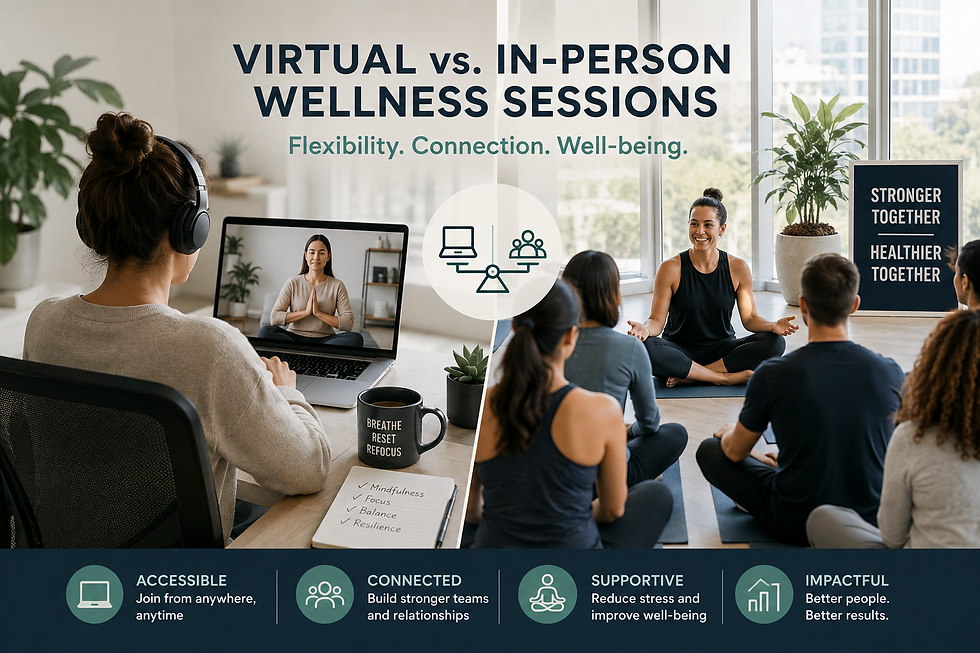
Some teams spend all day on Zoom.
Others collaborate in person.
Some work rotating schedules.
Others operate entirely remotely.
An effective wellness strategy adapts to those realities instead of forcing employees into a one-size-fits-all program.
For one company, recovery might look like guided mindfulness sessions before important planning meetings.
For another, it could mean breathwork exercises after high-pressure client presentations.
Leadership coaching, meditation, movement, reflective practices and intentional team conversations all support recovery in different ways.
The goal isn't checking a wellness box.
It's giving employees practical tools they can actually use.
Why Recovery Improves Team Performance
Stress isn't always harmful.
In fact, healthy stress helps people stay engaged, focused and motivated.
Problems arise when stress never has an opportunity to resolve.
Without recovery, elevated stress accumulates day after day.
Eventually, employees become mentally exhausted.
Recovery interrupts that cycle.
It allows the nervous system to shift away from constant vigilance and return to a more balanced state.
That shift benefits more than individual well-being.
Teams communicate more effectively.
People listen better.
Conflict becomes easier to manage.
Creative thinking improves because employees aren't operating from chronic mental fatigue.
Research over the past two decades has consistently linked mindfulness in workplace settings with improvements in stress management, well-being and work-related outcomes, while also emphasizing that organizational culture and leadership play an important role in determining long-term success. ScienceDirect.
Recovery Is Becoming Part of Company Culture
The strongest organizations don't treat wellness as something employees do after work.
Instead, they integrate recovery into the rhythm of the workday.
That could include:
Brief guided mindfulness sessions before important meetings.
Quiet spaces for focused breathing.
Leadership workshops centered on emotional resilience.
Team wellness experiences that strengthen relationships alongside performance.
Coaching programs that help employees build sustainable habits instead of temporary motivation.
These initiatives work best when they're supported by leadership rather than presented as optional extras disconnected from everyday work.
Employees notice when leaders model healthy behaviors themselves.
Taking thoughtful breaks, encouraging boundaries and prioritizing mental well-being sends a powerful cultural message that recovery isn't weakness—it's professionalism.
Building Recovery Into the Everyday Workday
One of the reasons workplace wellness programs fail is because they feel like an interruption instead of an advantage.
Employees are asked to attend a one-time seminar or complete a wellness challenge, only to return immediately to the same habits that caused stress in the first place.
Sustainable recovery works differently.
Rather than asking people to overhaul their schedules, successful organizations build small moments of recovery into routines that already exist.
For example, a team might begin Monday meetings with two minutes of guided breathing.
Managers may encourage employees to take a short walk before brainstorming sessions.
Leadership teams might schedule quarterly mindfulness workshops alongside strategic planning instead of treating wellness as a completely separate initiative.
These small adjustments are realistic, repeatable, and far more likely to become lasting habits.
The Role Leaders Play in Workplace Wellness
Culture always starts at the top.
Employees pay close attention to how leaders behave—not just what they say.
If managers consistently work through lunch, answer emails late into the evening, and never step away from their desks, employees often feel pressure to do the same.
Conversely, when leaders demonstrate healthy boundaries, prioritize recovery, and openly discuss well-being, they create psychological permission for others to do the same.
This is where mindful leadership becomes especially valuable.
Leaders who practice mindfulness often become more intentional communicators, better listeners, and calmer decision-makers during periods of uncertainty.
Those qualities naturally influence the teams around them.
Organizations looking to strengthen leadership effectiveness frequently combine workplace wellness initiatives with coaching and leadership development programs that reinforce these habits over time.
Measuring Success Beyond Productivity
The success of a wellness initiative shouldn't be measured solely by attendance.
Instead, organizations should evaluate whether employees feel more supported, engaged, and capable of managing workplace stress.
Some common indicators include:
Higher employee engagement.
Lower reported stress levels.
Improved collaboration across teams.
Reduced absenteeism.
Better employee retention.
Increased job satisfaction.
Stronger manager-employee relationships.
While no single wellness program solves every organizational challenge, consistent investment in employee well-being often produces benefits that extend well beyond individual health.
A healthier workplace frequently becomes a more resilient workplace.
Why Workplace Wellness Is an Ongoing Investment
The most successful organizations understand that wellness isn't a quarterly initiative or an annual event.
It's part of how people experience work every day.
As employee expectations continue evolving, businesses that prioritize mental well-being, recovery, and sustainable performance will likely be better positioned to attract and retain talented professionals.
That's especially true as conversations around workplace wellness Austin continue growing.
Employees increasingly value workplaces that recognize performance and well-being aren't competing priorities.
Instead, they're deeply connected.
Organizations that acknowledge this relationship create environments where people can perform at a high level without sacrificing their health in the process.
Final Thoughts
High-performing teams aren't successful because they never experience stress.
They're successful because they've learned how to recover from it.
Recovery isn't about doing less work.
It's about creating the conditions that allow great work to continue over the long term.
Whether through mindfulness sessions, leadership coaching, guided breathing exercises, or intentional moments of reflection, investing in recovery helps employees return to their work with greater clarity, resilience, and focus.
For organizations committed to building healthier workplace cultures, workplace wellness Austin is no longer simply an employee benefit—it's a strategic investment in people.
When employees feel supported, connected, and equipped to manage the demands of modern work, both individuals and organizations are better positioned to thrive.


Comments