


Virtual vs. In-Person Wellness Sessions: Which Is Better?
Why Workplace Wellness Looks Different Today
The modern workforce rarely shares one schedule. Some employees work remotely, while others split time between home and the office. Some travel constantly, while others work rotating shifts.
Because work itself has become more flexible, wellness programs must become more flexible as well. Traditional wellness initiatives often assumed everyone could gather in the same conference room at the same time, but that assumption no longer reflects how many businesses actually operate.
Today's companies are looking for wellness programs that meet employees where they are while remaining easy to implement and simple to maintain. That's one reason both virtual and in-person sessions have become valuable tools rather than mutually exclusive choices.
The Benefits of Virtual Wellness Sessions
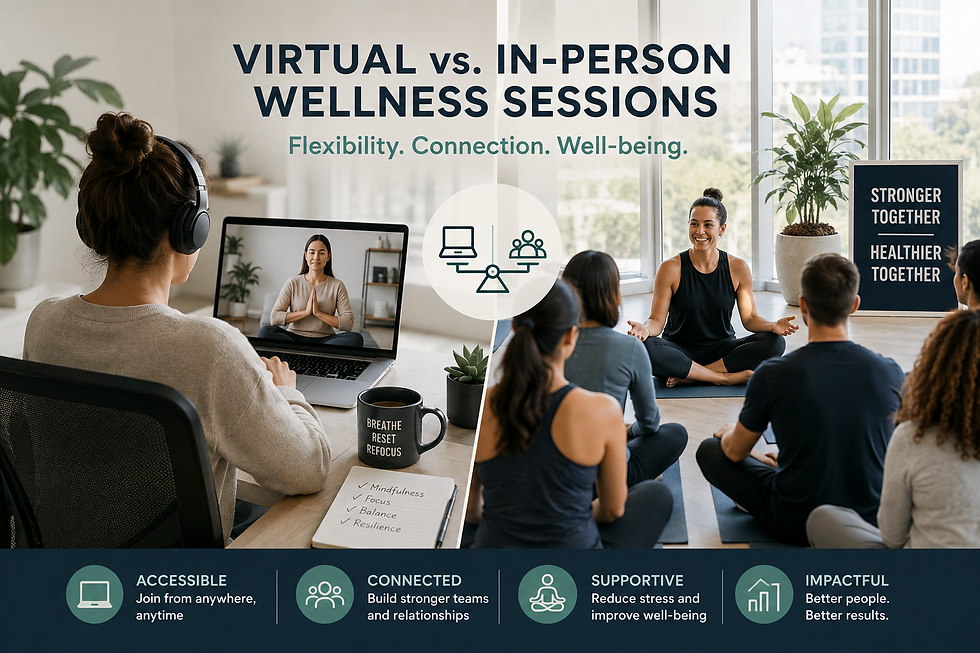
Virtual wellness sessions have expanded access in ways that weren't possible just a few years ago. Employees working from home, traveling for business, or located in different offices can all participate together without requiring additional travel or complicated scheduling.
Virtual sessions also reduce many of the barriers that keep employees from participating.
Join directly from their desk
Attend while traveling
Participate without changing clothes
Fit a session into a busy workday
Continue participating regardless of office location
Mindful Mob's corporate mindfulness sessions are intentionally designed around this convenience. Guided breathing exercises, mindfulness coaching, stretching, and meditation can all be completed from an office chair or home workspace without requiring specialized equipment or previous experience. This makes virtual sessions especially effective for organizations with distributed teams that want to provide a consistent wellness experience across every office.
Where In-Person Sessions Still Shine
Virtual accessibility doesn't mean in-person wellness has become obsolete. Face-to-face sessions create a shared experience that technology still struggles to replicate.
When employees participate in mindfulness workshops, yoga sessions, guided meditation, or team wellness events together, they're building stronger workplace relationships while investing in their personal well-being. These experiences often spark conversations that continue long after the session has ended.
In-person wellness sessions frequently provide:
Greater team interaction
Stronger accountability
Fewer digital distractions
Higher participation during activities
Better opportunities for relationship building
These benefits make in-person sessions especially valuable during company retreats, leadership meetings, quarterly planning events, and team-building activities.
The Biggest Mistake Companies Make
Many organizations spend too much time trying to determine whether virtual or in-person wellness is objectively better. The more important question is much simpler: which option will your employees actually use?
Even the best-designed wellness program delivers very little value if participation remains low. Employees who perceive sessions as inconvenient or disconnected from their workday eventually stop attending.
Successful wellness initiatives remove barriers instead of creating them. That's why flexibility has become one of the strongest predictors of long-term engagement. Companies addressing corporate burnout Austin teams experience often discover that offering multiple ways to participate leads to higher engagement than forcing everyone into a single format.
Why a Hybrid Wellness Model Often Delivers the Best Results
For many organizations, the answer isn't choosing one format over the other—it's combining both. A hybrid wellness strategy gives employees the flexibility to participate in ways that fit their schedules while still creating opportunities for meaningful, face-to-face interaction.
For example, a company might offer weekly virtual mindfulness sessions for convenience while scheduling quarterly in-person workshops focused on team building, stress management, or leadership development. Employees gain the consistency of regular wellness programming without sacrificing the collaborative benefits that come from gathering in person.
Hybrid models also make it easier for organizations to support remote employees without excluding office-based teams. Instead of asking everyone to adapt to one format, companies create a wellness program that adapts to the workforce.
Choosing the Right Format for Your Organization
The best wellness program depends on your people, not industry trends. Before deciding how to deliver wellness initiatives, leaders should evaluate how their teams work and what challenges they're trying to solve.
Consider questions such as:
Are employees primarily remote, hybrid, or in the office?
What participation barriers currently exist?
Is the goal stress reduction, team connection, leadership development, or all three?
How often can employees realistically participate?
What format will encourage long-term consistency?
Answering these questions helps organizations build wellness programs that employees actually use instead of programs that simply look good on paper.
Businesses looking for additional guidance can also explore Mindful Mob's corporate wellness resources, which provide practical strategies for building healthier workplace cultures
.
Measuring Success Beyond Attendance
Attendance is an important metric, but it shouldn't be the only measure of success. Effective wellness programs create lasting improvements that extend well beyond participation numbers.
Organizations often evaluate success by monitoring:
Employee engagement
Stress and burnout levels
Team morale
Employee retention
Absenteeism
Feedback from participants
Overall workplace culture
Companies that consistently invest in employee well-being often discover improvements across multiple areas of the business, including productivity, communication, and job satisfaction. According to the World Health Organization, promoting mental health in the workplace contributes to healthier employees and stronger organizational performance.
Regular employee feedback is equally important. Wellness initiatives should evolve as the needs of the workforce change rather than remaining static year after year.
How Mindful Mob Supports Modern Teams
Mindful Mob recognizes that no two organizations operate the same way. Some businesses have fully remote teams, while others thrive through in-person collaboration. Many fall somewhere in between.
That's why Mindful Mob offers flexible corporate wellness solutions designed to fit each organization's culture, goals, and workforce. Whether through virtual mindfulness sessions, in-person workshops, executive coaching, or customized wellness programming, their approach focuses on creating experiences employees genuinely value rather than simply checking a box.
Organizations can also explore executive coaching services to help leaders build healthier, more resilient teams while supporting their own professional development.
Conclusion
The debate between virtual and in-person wellness sessions doesn't have a universal winner. The right solution depends on your employees, your workplace culture, and your long-term wellness goals.
Virtual sessions provide accessibility, flexibility, and convenience for today's distributed workforce. In-person experiences strengthen relationships, encourage collaboration, and foster deeper engagement. For many organizations, a thoughtful combination of both formats delivers the strongest results.
As businesses continue addressing corporate burnout Austin professionals face, successful wellness programs will prioritize participation, flexibility, and meaningful employee experiences over choosing one delivery method exclusively. By meeting employees where they are, organizations can create healthier workplaces that benefit both individuals and the business as a whole.


Comments